

Summary
- An AI chatbot designed to bring consistency to the classification of unstructured declaration data using HS Codes.
- The world’s first NPU-based LLM/RAG solution deployed in a live customs administration system.
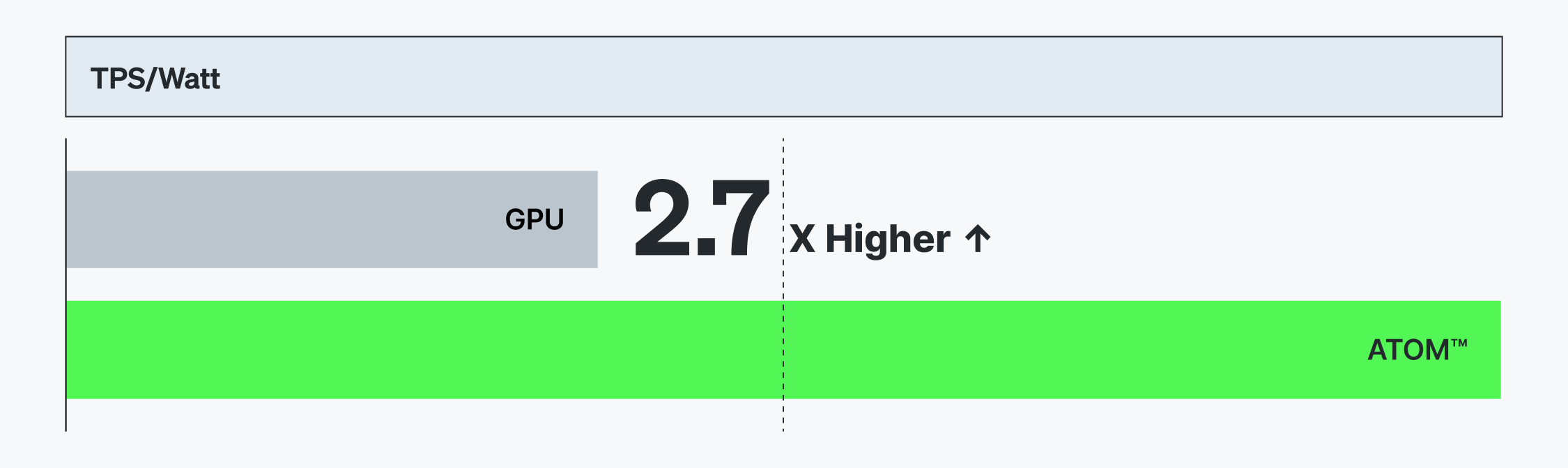
- Achieved a 2.7x advantage in power efficiency (TPS/Watt) compared to GPUs, validating superior operational efficiency.
Challenge
The Customs General Administration handles a massive volume of import/export declarations every year, facing the critical task of accurately classifying items with the correct Harmonized System (HS) Code. However, real-world declarations are often messy, filled with unstructured product names, specific model numbers, and mixed-language descriptions. This complexity frequently leads to inconsistent classification standards among staff and extended processing times. Since HS Codes are directly linked to tariff imposition, high-level precision is non-negotiable. To tackle these hurdles, the Mongolian Customs General Administration (MCGA) introduced an AI-powered HS Code recommendation chatbot.
Solution
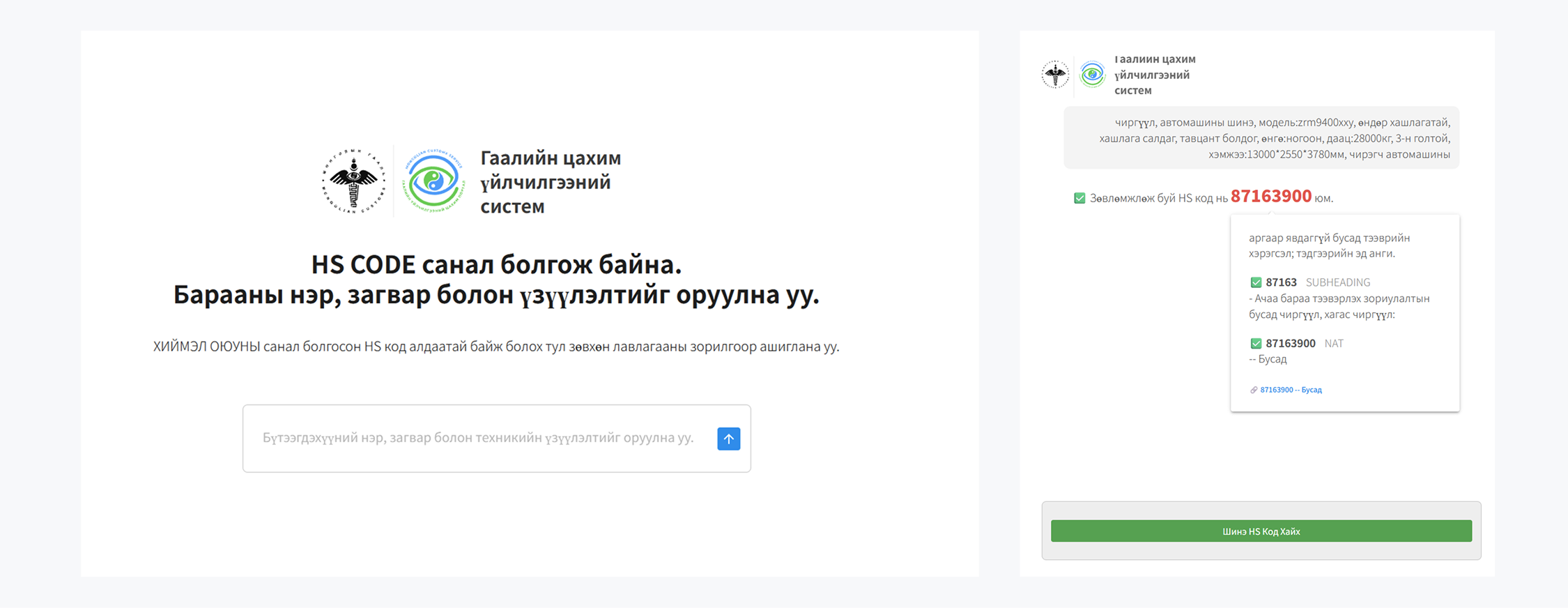
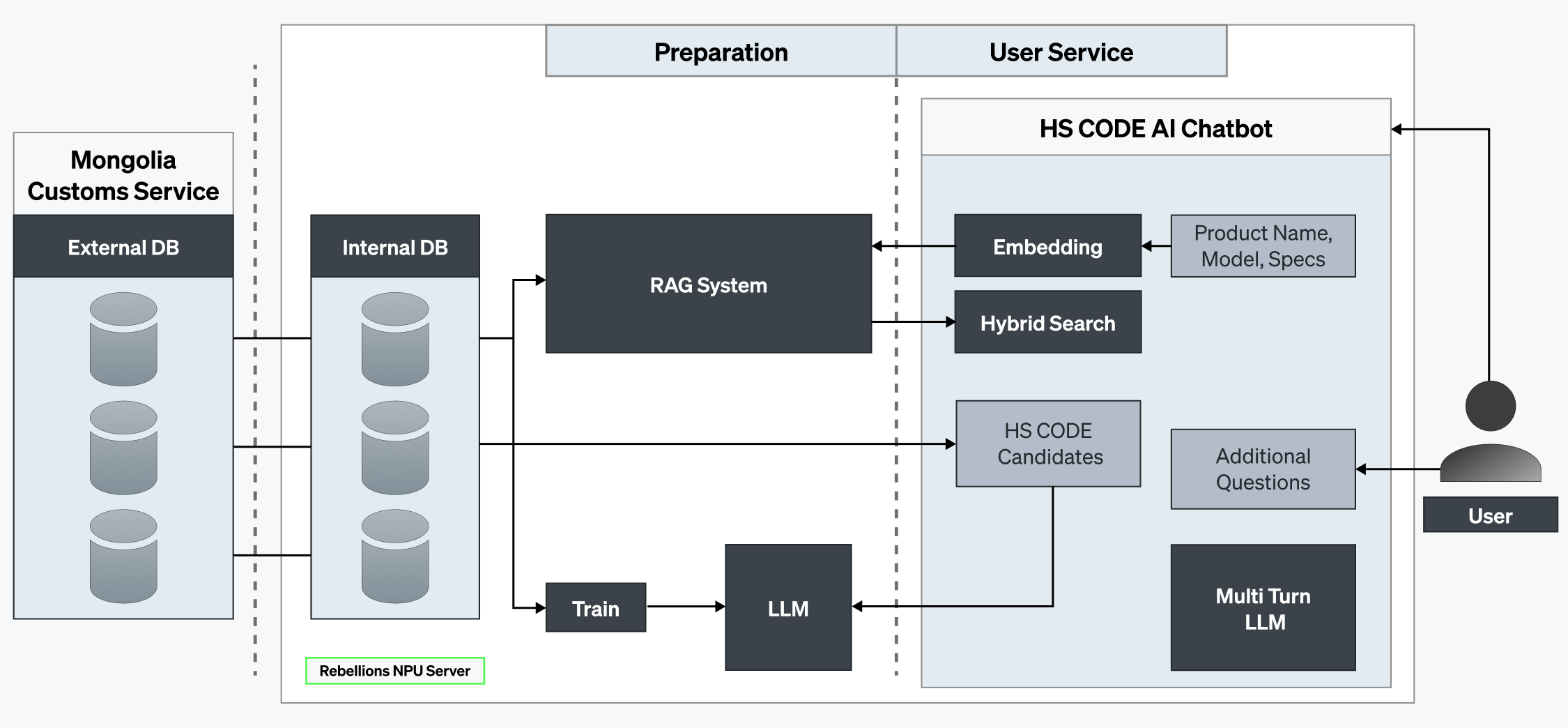
To automate HS Code classification, MCGA built a recommendation AI chatbot combining RAG-based Hybrid Search and LLM Multi-turn inference, all powered by Rebellions’ ATOM™ NPU. This service analyzes product names and descriptions entered by exporters/importers to automatically recommend the most suitable HS Code based on official classification standards. By helping declarants file more accurately, it significantly contributes to the efficiency of customs operations. The chatbot features a natural language conversational interface that analyzes Mongolian inputs to understand product nuances. It references similar item data and HS Code definitions to present the best candidates. Furthermore, it can refine its recommendations or ask for additional details based on user feedback. The result is a reduction in classification errors, enhanced transparency and trust in customs administration, and faster overall processing.
Result
The MCGA HS Code AI Chatbot marks the world’s first commercial application of an NPU-based system for customs administration support. Since its deployment, the accuracy and consistency of HS Code recommendations have improved, and review times for officials have been shortened. Additionally, the integration of automated input functions has reduced errors previously caused by manual administrative entry.
From an infrastructure perspective, the NPU architecture demonstrated a power-to-performance ratio (TPS/Watt) 2.7 times higher than that of GPUs. This is a crucial advantage for public institutions where data center and server room capacity may be limited. This project stands as the first successful case of combining AI, LLM, and NPU technologies in a live operational environment, serving as a core foundation for the Mongolian government’s future AI expansion roadmap.
Appendix: NPU Usage Guide
Get started now: Prepare a pretrained model → Compile with the RBLN Compiler → Load & Infer
- Running Gemma Models on Multi-NPU → View Example
- Serving Llama 3.1 8B via vLLM → View Example
- Text Generation with C/C++ Runtime → View Example

Share This: