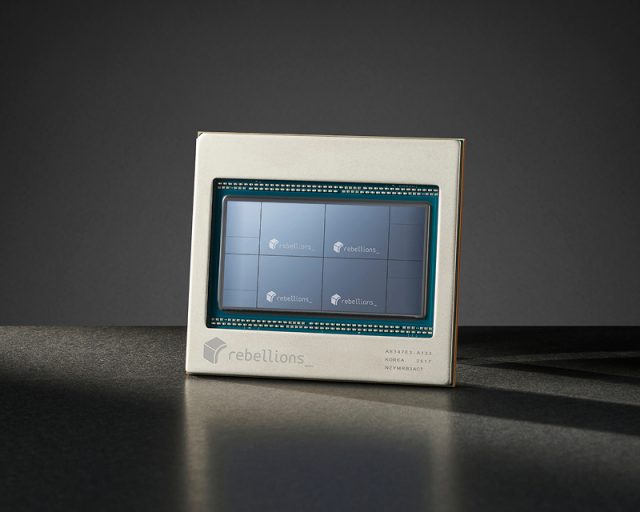
Rebellions Inference Platform
Deploy AI models.
Scale inference.
Operate AI services.
Built on industry-standard software. Optimized for Rebellions hardware.
The Complete Software Stack
Seven layers, fully integrated — from your model file to rack-scale production.
YOUR MODEL
View supported frameworksML Framework
Start with the framework you already use. No migration, no retraining required.
Your existing PyTorch, TensorFlow, or Hugging Face model works as-is. Rebellions SDK plugs into your current workflow - you don't need to rewrite model code or switch frameworks.
OPTIMIZE
View compiler docsCompiler
Translates your model into instructions Rebellions NPUs can execute — with automatic performance optimization baked in.
One compile step converts your model to a hardware-optimized binary. The Frontend Compiler handles model abstraction and graph optimization; the Backend Compiler produces the final Command Stream for the NPU. Most models compile without code changes.
COMPUTE
Compute Library
A comprehensive library of NPU-optimized math operations that power every model inference - from CNNs to the latest LLMs.
Hundreds of low-level operations (GEMM, LayerNorm, attention kernels) are pre-optimized for Rebellions Neural Engines. This is what makes inference fast - and it expands with every SK release to support new model architectures.
EXECUTE
View Runtime APIRuntime Module
Manages model execution on the NPU - memory, scheduling, and throughput - while integrating natively with your serving framework.
The Runtime sits between your serving layer (vLLM) and the hardware. It handles data movement, execution scheduling, and performance monitoring -so your serving stack just works, without custom integration code.
INTERFACE
View Kubernetes integrationDriver
Bridges your OS and orchestration layer to the NPU - including native Kubernetes device plugin support for cluster deployments.
The Kernel-Mode Driver (KMD) makes the OS recognize Rebellions NPUs as standard compute devices. The User-Mode Driver (UMD) provides clean APis for application integration. Kubernetes Device Plugin and NPU Feature Discovery are included for cloud-native deployments.
CONTROL
Firmware
The lowest software layer on the chip - orchestrates workloads across memory and Neural Engines, and monitors hardware health in real time.
Firmware handles workload scheduling across the NPU's memory hierarchy and Neural Engines. It runs on-chip and is updated alongside the SDK. Health status and power metrics are exposed up the stack to Prometheus/Grafana via the Metrics Exporter.
HARDWARE
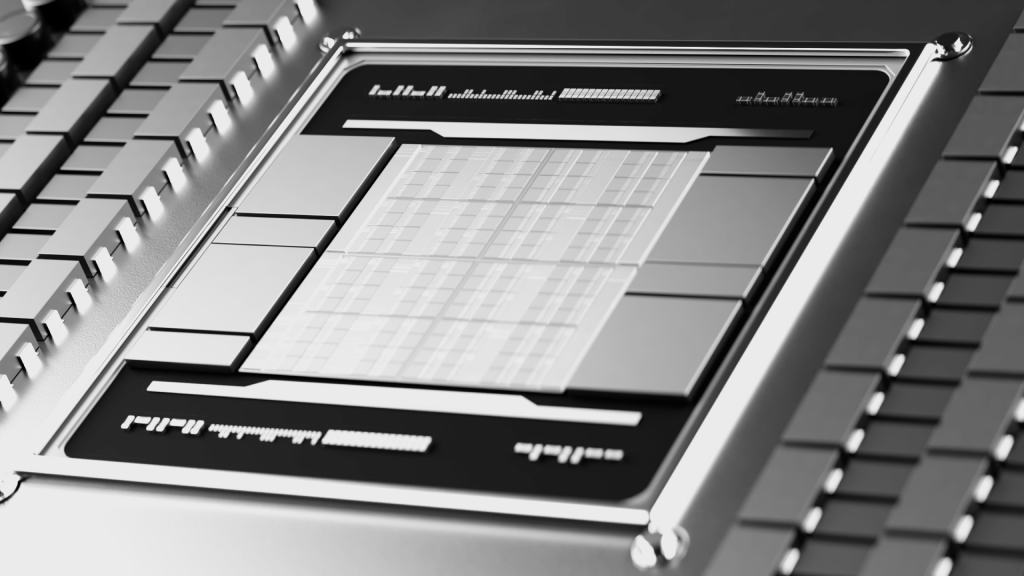
Explore hardwareRebellions NPU
Purpose-built Al inference hardware - from a single accelerator card to rack-scale infrastructure.
Every layer above is co-designed with the hardware - which means the full stack runs without friction from model file to NPU execution. Start with a single RebelCard, scale to RebelServer, then RebelPOD without changing your software stack.
From Model to Service
Your existing workflow, optimized for production.
Bring your model
Load from PyTorch or Hugging Face. No retraining needed.
Compile once
RBLN Compiler optimizes your model for Rebellions NPUs in one step.
Serve with your stack
Deploy via vLLM. No custom integration code.
Scale without friction
Same software stack runs on RebelServer, RebelRack and RebelPOD.
Works with Your Existing AI Stack
No vendor lock-in.
Works with the tools your team already uses.
Inference Engines
 vLLM
vLLM
Cloud & Orchestration
 Kubernetes
 OpenStack
Operating Systems
 Ubuntu
 RHEL
RHEL
AI Frameworks
 PyTorch
 TensorFlow
 Hugging Face
Cloud Native Operations
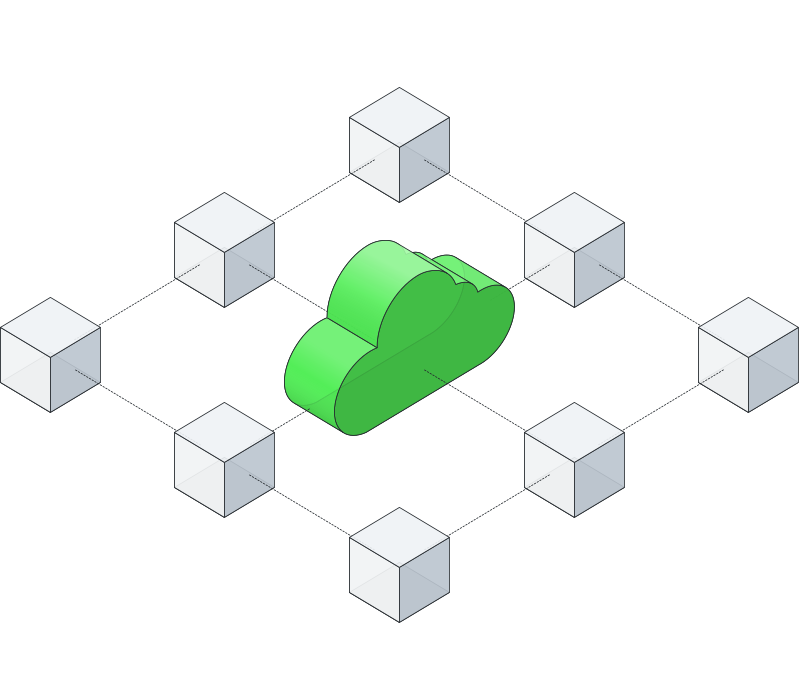
Automated Cluster Integration
Rebellions NPUs are automatically discovered, labeled, and made available to Kubernetes workloads. From node feature discovery to device plugin integration, the cluster can recognize NPU-ready nodes and schedule inference workloads without manual setup.
Simplified Lifecycle Management
The RBLN NPU Operator helps deploy and manage the full NPU software stack across Kubernetes clusters, including drivers, resource plugins, runtime components, and monitoring agents. Together with the RBLN NPU DRA Driver, it also enables dynamic resource allocation and flexible scheduling to support multi‑tenant, production‑scale inference workloads
Built-in Observability
NPU utilization, power, temperature, memory usage, and device health metrics are exported to Prometheus and visualized through existing Grafana dashboards — no separate monitoring stack required.
Enterprise Platform Support
Rebellions supports Kubernetes and Red Hat OpenShift environments, with native integration into OpenShift AI to enable production-grade inference services across cloud-native, multi-tenant, and partner AI platforms.
Scale from a Server to a Data Center
The same software stack runs across every tier of Rebellions hardware.
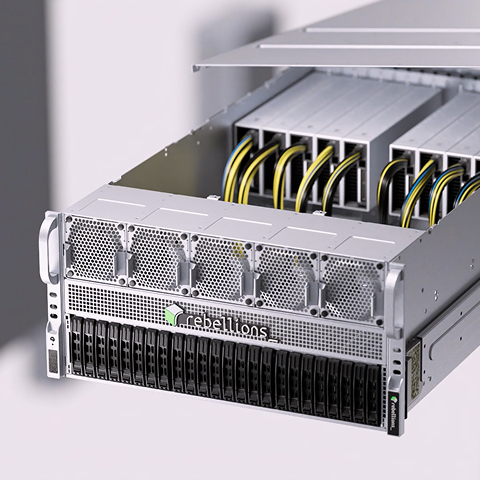
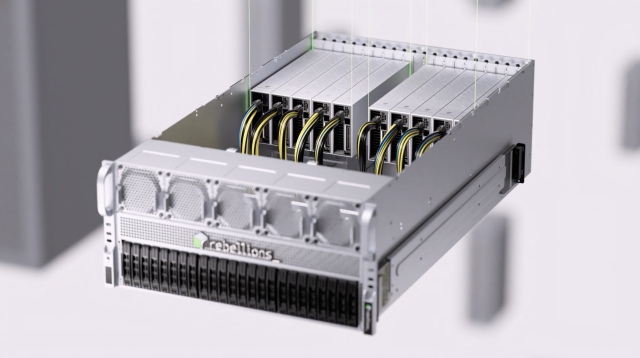
RebelServer™
Multi-card server nod
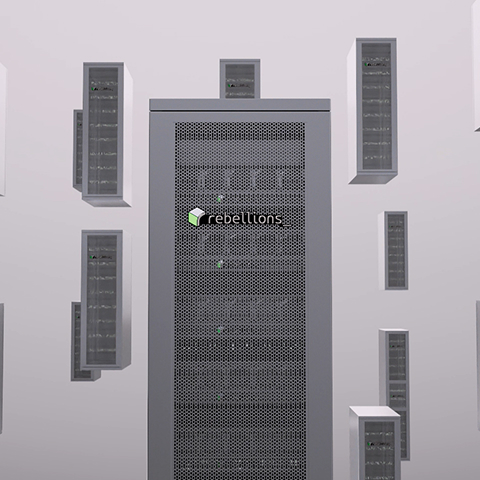
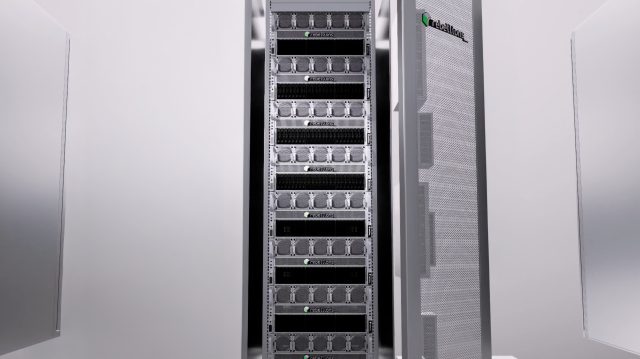
RebelRack™
Rack-scale infrastructure
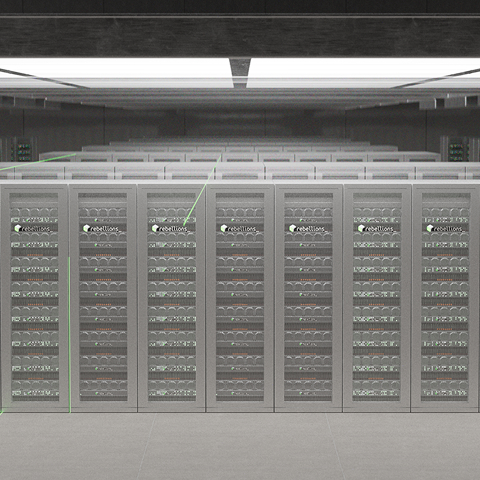
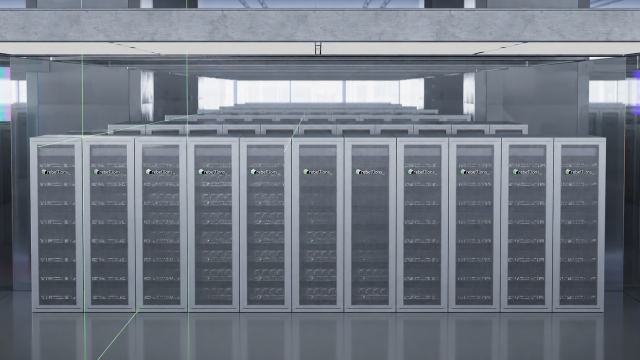
RebelPOD™
Data center-scale deployment
Why Rebellions

Familiar
Native PyTorch and open ecosystem. No proprietary frameworks to learn.

Efficient
Hardware and software co-optimized for maximum inference performance.

Scalable
From single-node deployments to full rack-scale infrastructure.
$ pip install rbln-sdk (compiler, vllm-rbln, …)
✓ RBLN SDK installed
$ rbln compile model file (safetensors, pt, …)
✓ Compiled for Rebellions NPU
$ rbln serve compiled_model --port 8000
Start with the RBLN SDK
Install the SDK, compile your first model,
and run it on Rebellions hardware in minutes.